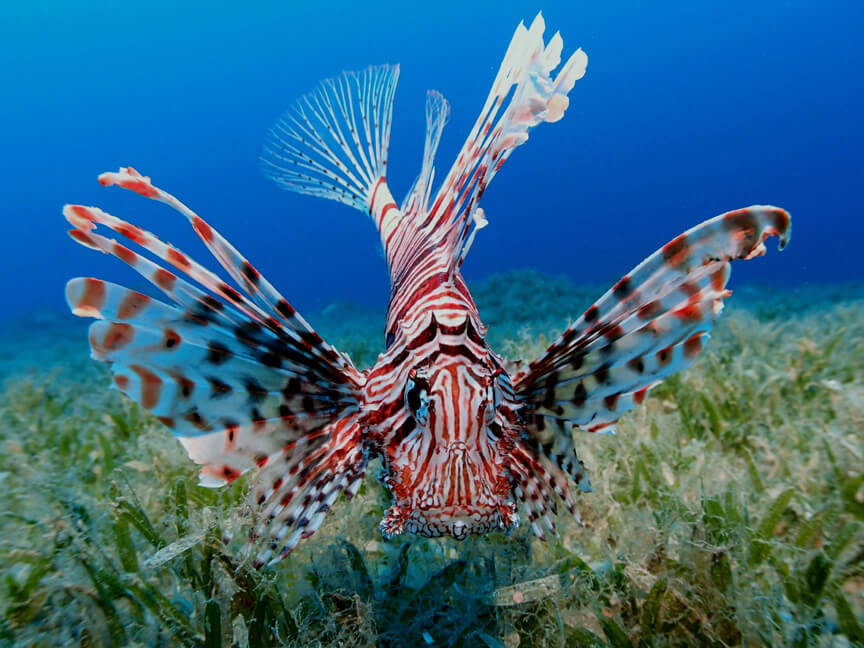
The Economics of Lionfish: Turning a Problem into an Industry
When Roger J. Muller Jr. talks about the lionfish crisis, he often returns to a simple economic principle: the most sustainable conservation programs are the ones that pay for themselves. Programs that rely solely on grants, volunteer labor, and institutional goodwill eventually run out of one or all of those resources. Programs that create genuine economic value, including jobs, revenue, trade, and tourism, can run indefinitely because they’re self-reinforcing.
The good news is that lionfish, despite everything it does to reef ecosystems, has real economic potential. And a growing number of entrepreneurs, restaurateurs, dive operators, artists, and conservationists are building businesses around that potential.
Lionfish as Sustainable Seafood: The Restaurant Market
The most straightforward economic case for lionfish is as a premium seafood product. The fish is genuinely delicious: firm, white, mildly sweet, versatile, and comparable in quality to expensive market species like grouper, hogfish, and snapper. In Caribbean destinations where it’s regularly available, it commands premium prices precisely because of its conservation story: diners understand they’re eating something that would otherwise be damaging a reef, and they’re willing to pay for that narrative alongside the quality.
Several Caribbean restaurants have featured lionfish as a signature sustainable dish, the Ritz-Carlton Grand Cayman among them, as Roger experienced firsthand. This ‘halo effect,’ associating a restaurant’s brand with environmental responsibility, has real commercial value and is increasingly driving menu decisions in Caribbean tourism markets where guests are environmentally conscious.
Lionfish Jewelry and Art: Susan Hieter’s Lionfintastic Story
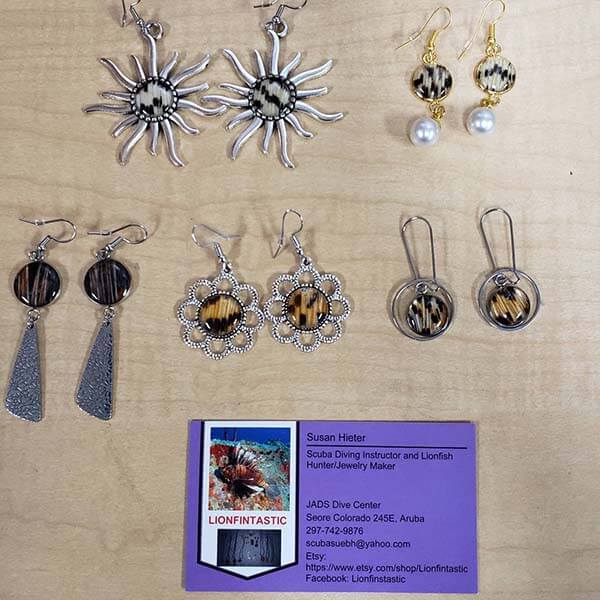
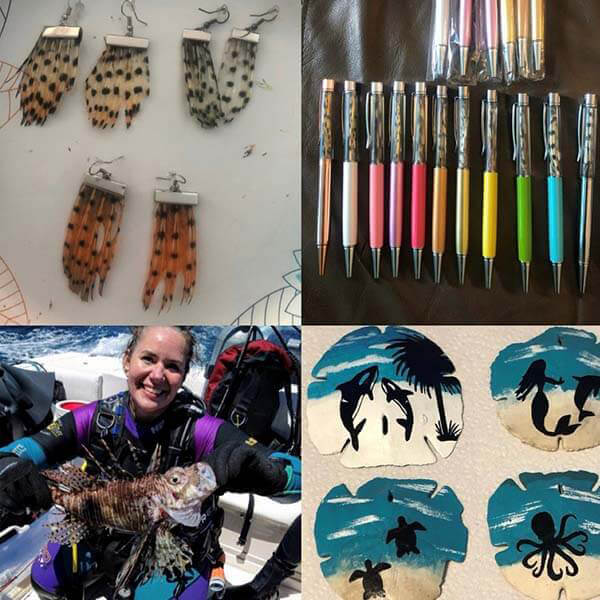
The Lionfintastic enterprise run by Susan Hieter in Aruba is one of the Caribbean’s most creative economic models built around lionfish. By harvesting spines from removed fish, material that would otherwise be discarded, and transforming them into wearable jewelry, Susan has created a high-value artisanal product with a compelling story that sells itself.
The economic model is elegant: the raw material is free (it comes from conservation dives), the labor is skilled artisanal work that commands appropriate pricing, and the market is pre-primed by the conservation narrative that every piece carries. Tourists in Aruba are actively looking for meaningful souvenirs, things that connect them to the island’s identity and story. A lionfish spine pendant from Lionfintastic is exactly that.
Lionfish Hunting as Ecotourism
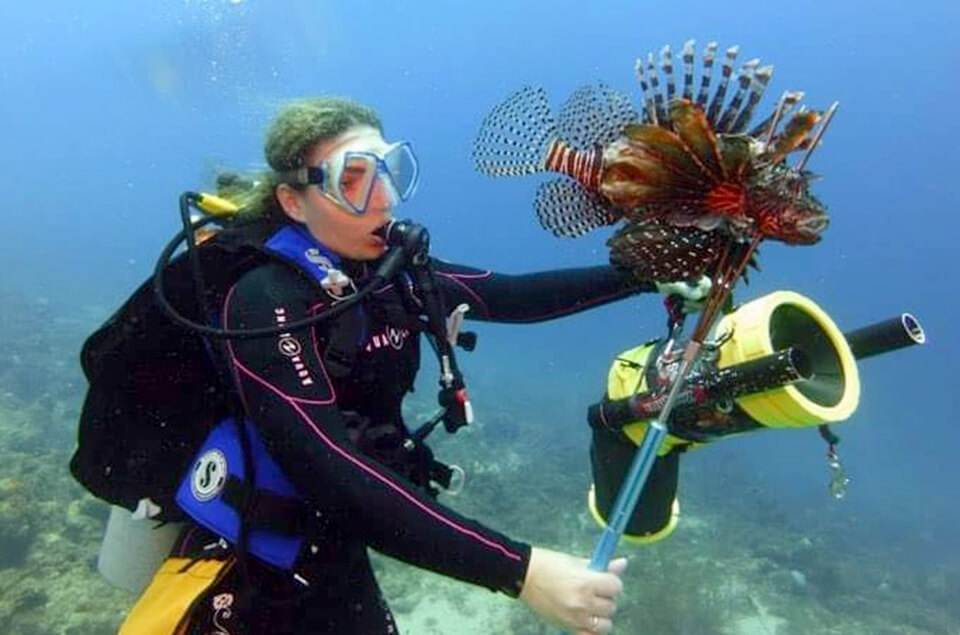
Dive tourism built around lionfish hunting is a growing niche that aligns perfectly with the broader trend toward experiential, purpose-driven travel. Travelers increasingly want to do something meaningful on vacation, not just observe nature, but to contribute to protecting it. Lionfish hunting trips deliver exactly this experience, combining high-quality diving with tangible conservation impact.
Roger’s own expedition model, where participants pay for a guided hunting trip aboard his 42-foot Sea-King, learn proper technique, make real removals, and often end the day with a meal prepared from their catch, is a template for this kind of ecotourism. Dive operators in Roatán, Aruba, and the Cayman Islands are running similar programs with increasing sophistication and commercial success.
Government and Grant Programs Supporting Removal
Several Caribbean governments and US federal agencies have developed programs supporting lionfish removal, ranging from direct bounty systems (paying hunters per lionfish removed) to grant funding for organized derby events, equipment subsidies, and research partnerships. Florida’s reef management agencies have been particularly active. As the economic case for removal programs strengthens, government support has followed.
The Full Market Ecosystem
The full economic ecosystem around lionfish, including restaurants, jewelers, dive operators, educators, equipment manufacturers, researchers, and government programs, is still young but growing. The LionfishDivers.com community is part of this ecosystem, and every interaction that produces economic value for lionfish conservation makes the whole system more durable. Hunt lionfish. Eat lionfish. Buy lionfish art. Take a lionfish hunting course. Every economic choice in favor of the invasion’s opponents strengthens the forces fighting back.
For more about lionfish education, SSI certifications, hunting expeditions, and cooking, visit LionfishDivers.com and subscribe for updates on Roger’s upcoming SSI Lionfish Awareness Distinctive Specialty certification program.