Lionfish Anatomy: Understanding the Fish You’re Fighting
To hunt anything effectively and safely, you need to understand it. For lionfish, that understanding starts with anatomy: the specific physical attributes that make this fish one of the ocean’s most effective predators, one of the most successful invasive species ever recorded, and one of the most important targets for the conservation-minded diver.
Roger J. Muller Jr. covers lionfish anatomy in detail in SSI’s Invasive Species Management course and in his own forthcoming Lionfish Awareness specialty. Here’s the essentials: what the fish is built like, what each part does, and why it matters for how you hunt, handle, and prepare them.
The 18 Venomous Spines
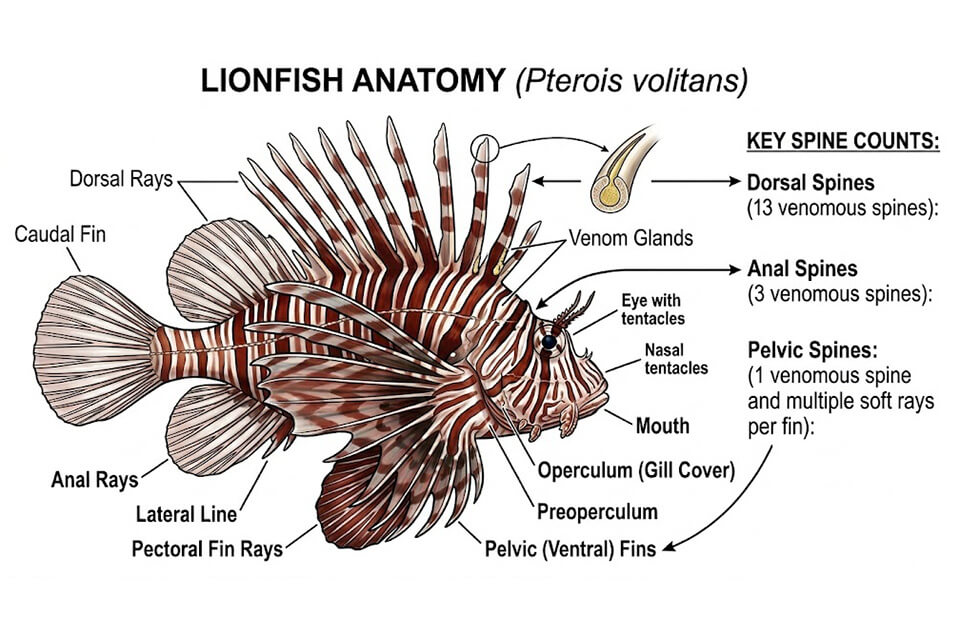
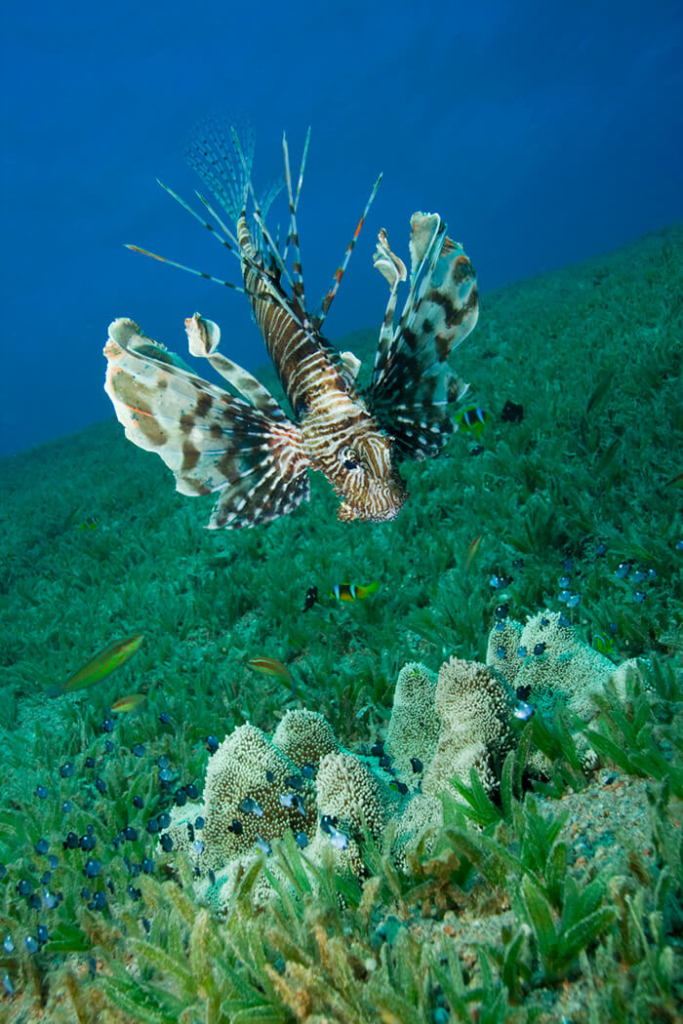
The most immediately important anatomical feature for any diver or handler is the venom delivery system: 18 needle-like spines distributed across three locations on the fish’s body. Thirteen dorsal spines run along the top of the fish’s back in a dramatic fan-like display; these are the most visible and the ones most commonly involved in accidental stings. Three anal spines project from beneath the rear of the fish’s body, and two pelvic spines extend from the underside, near the fish’s ‘armpits.’
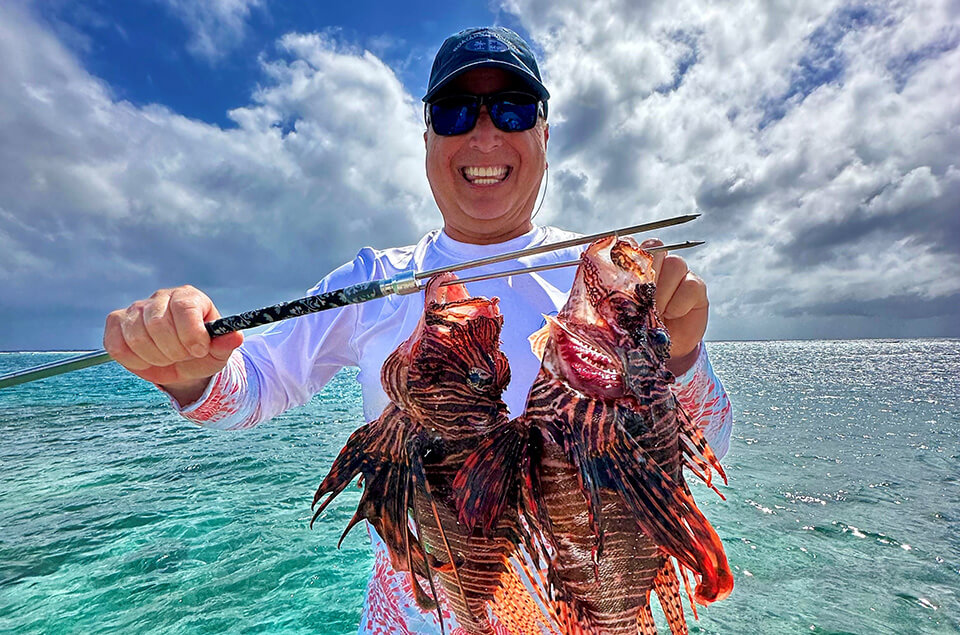
Each spine is grooved along its length, with paired venom glands at the base. When a spine penetrates skin, venom travels from the glands up the grooves and into the wound. The fish does not inject venom actively; it’s a passive system triggered by pressure on the spine. This means even a ‘dead’ lionfish can envenomate if its spines penetrate skin. Always treat lionfish as venomous until every spine has been clipped.
The Expandable Stomach: A Key to Their Success
One of the most extraordinary, and ecologically troubling, anatomical features of the lionfish is its stomach. Under normal conditions, the lionfish stomach is a modest-sized organ like any other reef fish’s. But under the right circumstances, it can expand to more than 30 times its resting volume. This means a lionfish can consume prey items almost as large as itself, and can eat multiple successive meals without pausing for digestion.
In practice, this translates to a voracious predator with virtually no meaningful limit on how much it can eat in a given period. Studies have documented lionfish consuming dozens of small fish in a single hunting session. The expandable stomach is a central reason why lionfish have such a catastrophic impact on juvenile reef fish populations.
Fins and Camouflage: How Lionfish Hunt
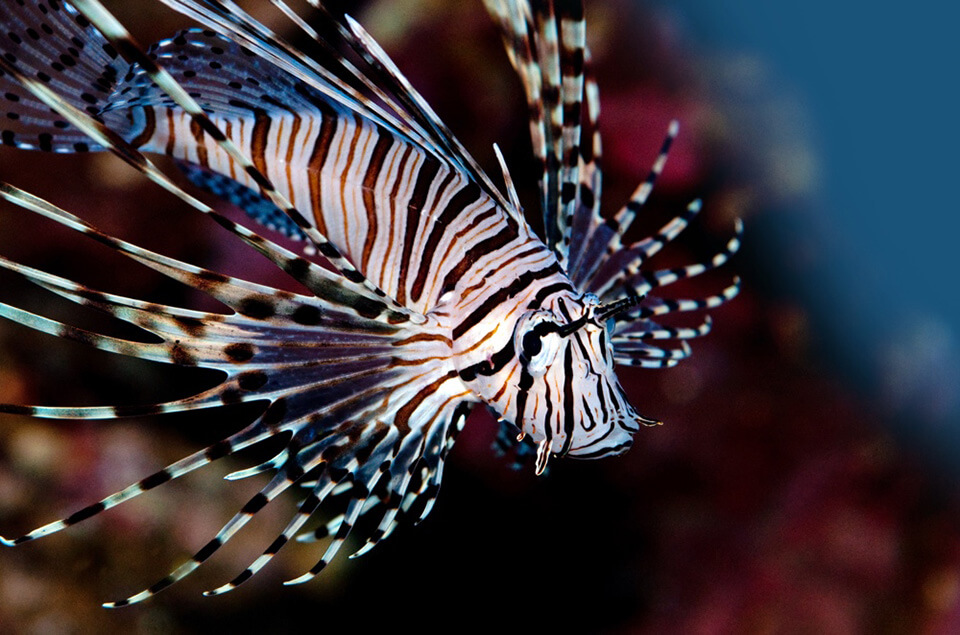
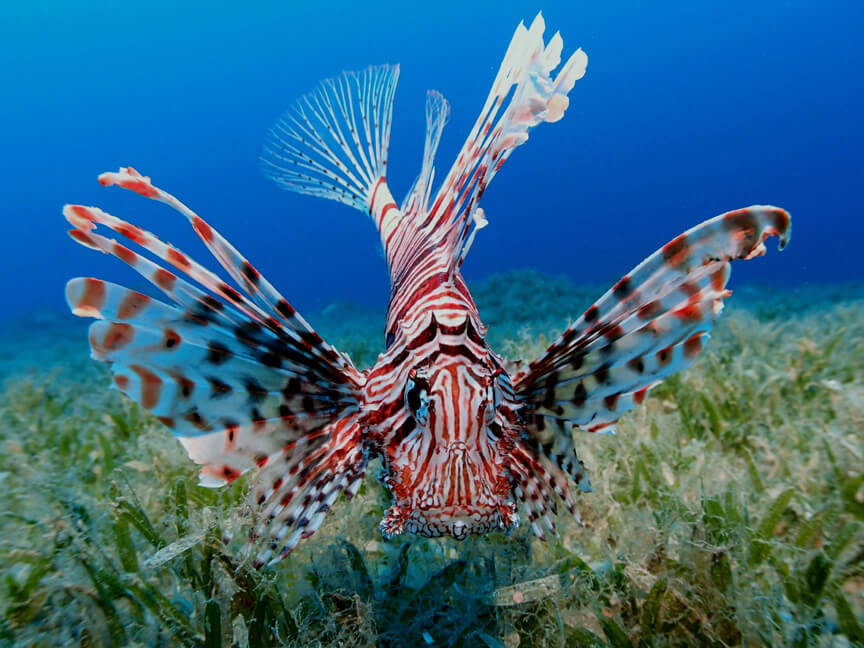
The lionfish’s most striking visual feature, the elaborate arrangement of pectoral, dorsal, and pelvic fins, is not merely decorative. These structures serve multiple functions in the hunt. The large, wing-like pectoral fins are used as a corralling tool: lionfish spread them wide and angle them to gently herd small fish into tighter positions before striking. The dramatic coloration, alternating brown, red, and white vertical bands, provides camouflage against the complex visual background of a coral reef, where patterns and shadows abound.
Lionfish also produce pulsating, rhythmic fin movements that may create subtle water disturbances that disorient prey. They approach prey head-on (their outline from the front is dramatically reduced compared to a side view), closing the distance slowly until they’re within strike range. Then they make an incredibly fast lunge; the strike itself takes milliseconds. The whole process is a masterclass in ambush predation.
Eyes and Sensory Systems
Lionfish have large, laterally-placed eyes that provide excellent visual coverage for detecting both prey and threats. Their vision in low-light conditions is notably good, which is why they’re effective nocturnal hunters, a characteristic that makes night diving particularly productive for removal. They also possess a well-developed lateral line system (a sensory organ that detects water pressure and movement changes), which helps them detect the movement signatures of potential prey even in low visibility conditions.
Size and Lifespan: What to Expect in the Wild
Atlantic invasive lionfish typically reach 12–15 inches in length at maturity, though specimens exceeding 18 inches have been documented. They can live up to 15 years under ideal conditions. In the Caribbean, the absence of natural predators and abundant prey has produced particularly well-fed, healthy specimens; Roger has encountered fish approaching the maximum documented size on virtually every Caribbean expedition. Large, old lionfish represent decades of breeding potential and should be priority removal targets whenever encountered.
For more about lionfish education, SSI certifications, hunting expeditions, and cooking, visit LionfishDivers.com and subscribe for updates on Roger’s upcoming SSI Lionfish Awareness Distinctive Specialty certification program.