Lionfish and Coral Reefs: A Crisis Beneath the Surface
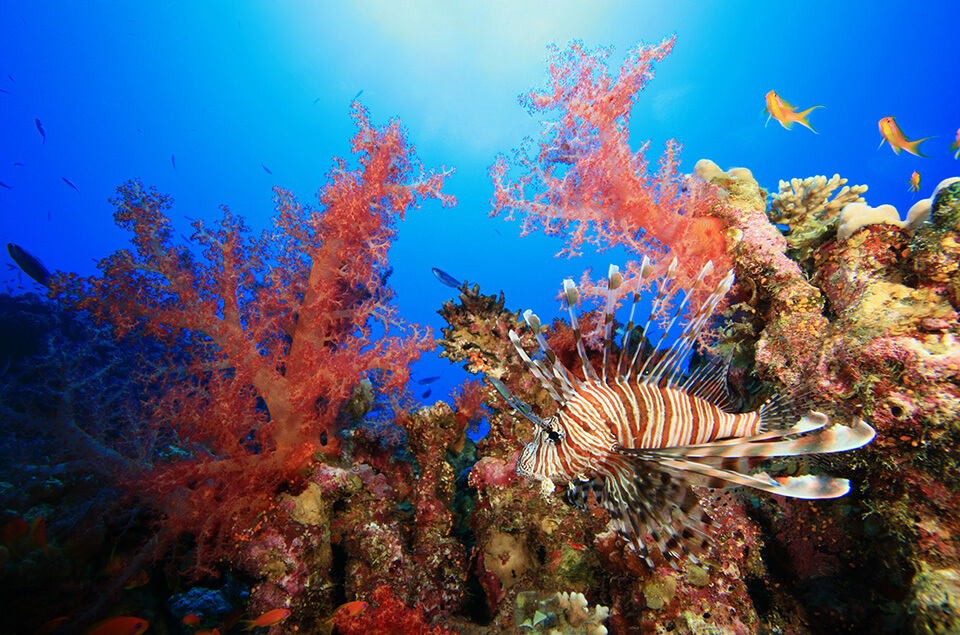
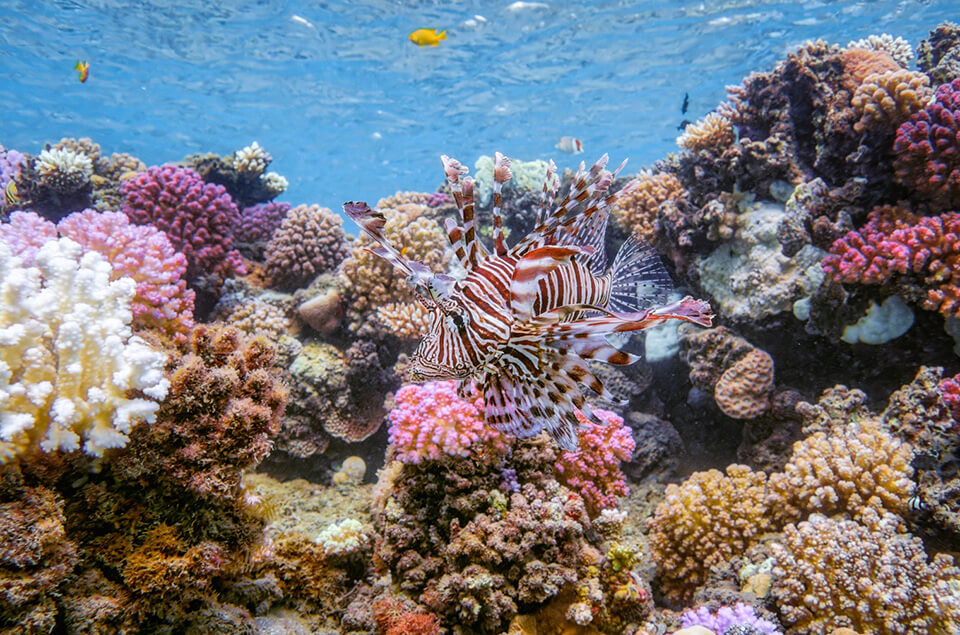
If you’ve ever looked at a healthy Caribbean coral reef, with the astonishing density of color, life, and movement that makes underwater photography an obsession and reef diving one of the most popular adventure activities in the world, and then imagined that same reef stripped of much of its fish life, quiet, the coral heads still standing but the complex, darting, schooling abundance of fish life replaced by a relative emptiness, you’ve begun to understand what an uninhibited lionfish invasion can do.
The connection between lionfish and coral reef health is not theoretical. It’s been documented at sites across the Caribbean and Gulf of Mexico, and the picture is alarming. Roger J. Muller Jr. has dived both ends of the spectrum: reefs that are actively hunted and reefs that are not, and the difference is immediately visible from the moment you enter the water.
The Role of Small Reef Fish in Coral Health
A coral reef is not just coral. It’s an ecological community of extraordinary complexity in which hundreds of species interact through networks of predation, competition, symbiosis, and mutualism. Among the most important members of this community are the small reef fish that most casual snorkelers see but don’t think much about: the tiny wrasses, gobies, damsels, blennies, and juvenile parrotfish that dart in and out of coral crevices.
These small fish perform critical ecosystem services. Parrotfish scrape algae from coral surfaces, preventing algae from smothering live coral. Cleaner wrasses remove parasites from larger fish, maintaining the health of species that would otherwise succumb to infection. Chromis and other planktivores cycle nutrients through the water column. Gobies aerate the substrate. Every one of these ecological roles depends on fish populations that are being devastated by lionfish predation.
How Lionfish Disrupts the Reef Food Web
Lionfish don’t choose their prey with any ecological awareness of the roles those prey species play. They are opportunistic generalists eating whatever small fish or crustaceans they can capture. The result is a broad-spectrum assault on the fish community that removes multiple functional groups simultaneously. When lionfish reduce damselfish, wrasse, and parrotfish populations together, the cascade effects are felt across the entire reef system.
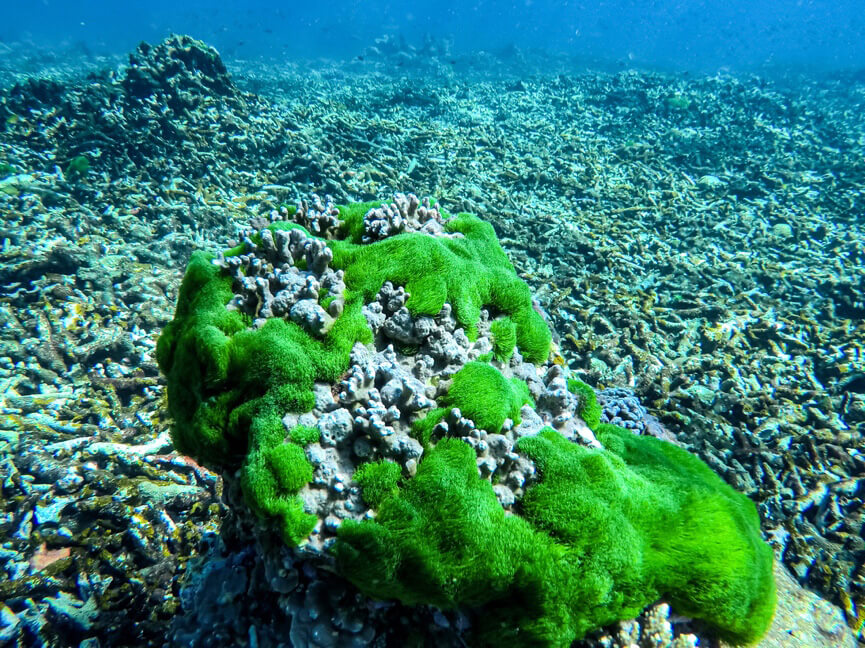
Algae, unchecked by reduced herbivore populations, can overgrow coral. Larger predatory fish that feed on the mid-size fish that feed on the small fish lionfish are consuming face reduced prey availability. The system becomes less diverse, less resilient, and less capable of recovering from additional stresses like bleaching or storm damage.
Documented Reef Decline in Heavily Invaded Areas
Scientific documentation of lionfish impacts on Caribbean reefs is extensive and consistent. Studies at sites across the Bahamas, Belize, the Cayman Islands, and the US Virgin Islands have documented 50–80% reductions in prey fish biomass at heavily invaded sites over periods of months to a few years. The pace of the decline is staggering by ecological standards; changes that would normally require decades of habitat loss are occurring over months of intense lionfish predation.
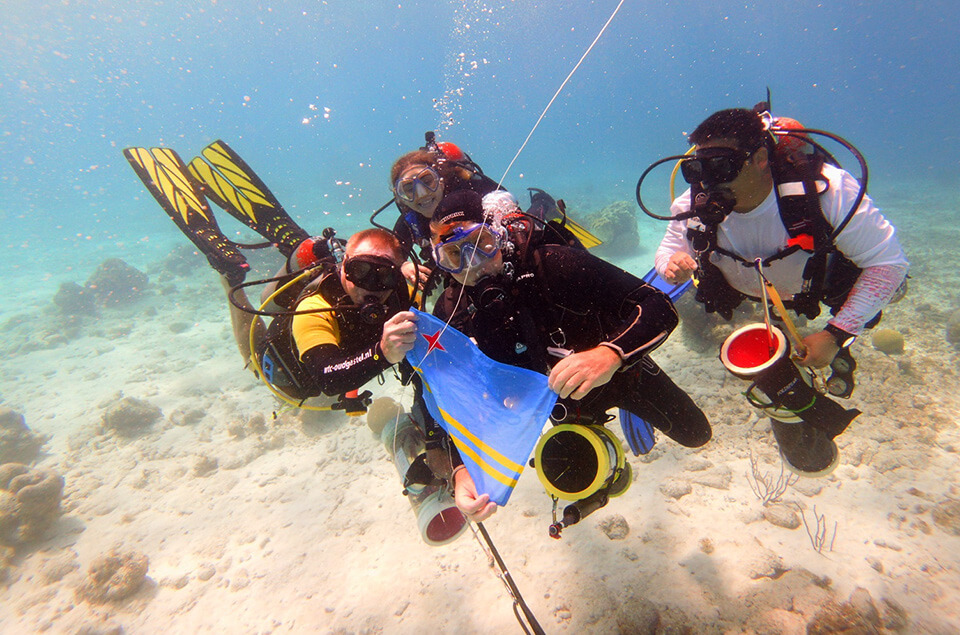
Roger has dived sites in Aruba and Roatán that were notable for their fish abundance on earlier visits and showed distinctly reduced populations on return trips, a personally felt dimension of the crisis that no scientific chart can fully communicate.
What Healthy vs. Lionfish-Impacted Reefs Look Like
The visual difference between an actively hunted reef and an unmanaged one can be striking even to a casual observer. On hunted reefs, you see schools of small fish around coral heads, juvenile fish in open water, the constant movement of wrasses and other small species. On heavily impacted reefs, the small fish are sparse or absent, the reef feels quieter, and the dominant visual feature, ironically, is often a cluster of well-fed lionfish hovering calmly in positions they once had to share with dozens of other species.
Hope: Reefs That Have Responded to Removal Efforts
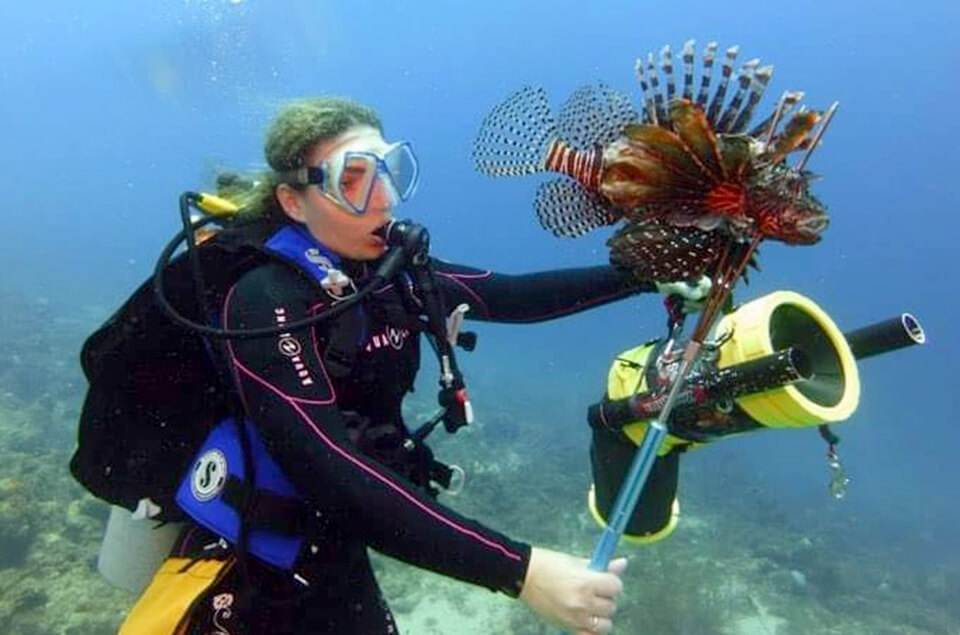
Here is the hope that keeps Roger J. Muller Jr. diving and hunting: research has demonstrated that reefs with active, consistent removal programs recover measurably. Fish populations at hunted sites show higher diversity and abundance than control sites within months of programmatic removal beginning. The reef does not forget how to be healthy; it only needs the pressure to ease long enough to begin recovery. Provide that relief through active hunting, and the reef responds. Every lionfish removed is one more step toward that response.
For more about lionfish education, SSI certifications, hunting expeditions, and cooking, visit LionfishDivers.com and subscribe for updates on Roger’s upcoming SSI Lionfish Awareness Distinctive Specialty certification program.