How to Fillet a Lionfish Safely: Step-by-Step Guide
Of all the skills involved in lionfish hunting and conservation, filleting is the one that causes the most hesitation in new practitioners. The fish looks intimidating with all those spines. The venom question lingers. And most people have never filleted a fish in their lives, let alone an unusual-looking one from the Caribbean.
Roger J. Muller Jr. is here to tell you: once you’ve done it twice, filleting a lionfish is no more challenging than filleting any small to medium reef fish. The key is following the right sequence of safety steps before your knife ever touches the flesh. Do those steps, and everything else is straightforward.
Step 1: Clipping the Venomous Spines
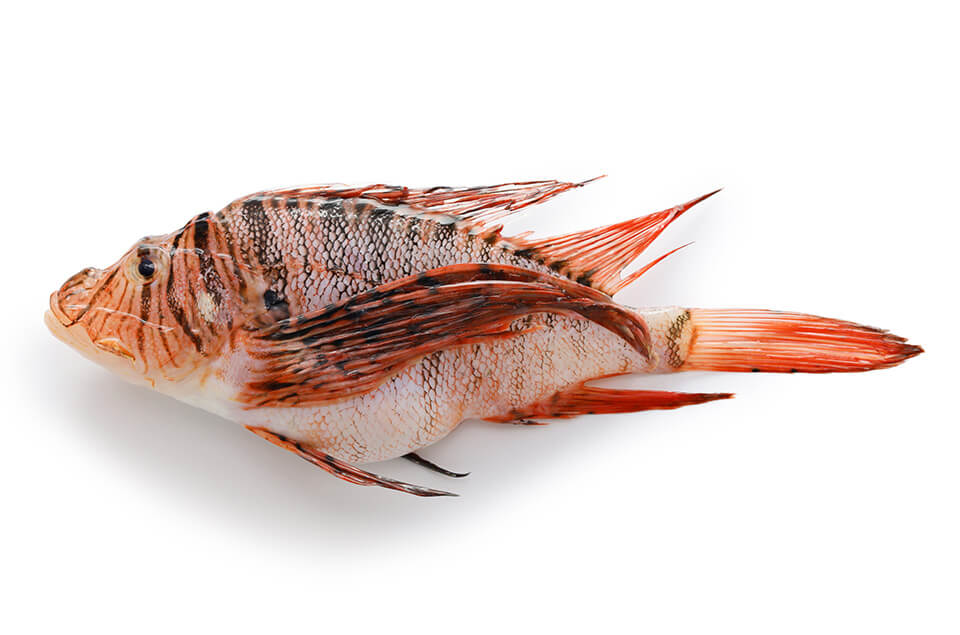
Before you do anything else with a freshly harvested lionfish, clip all 18 venomous spines. Use heavy-duty kitchen shears, the kind you’d use for cutting through poultry bones, rather than a knife. You’re looking for 13 dorsal spines along the top of the fish, 3 anal spines beneath the rear, and 2 pelvic spines on the underside near the fish’s chest. Cut each spine close to the base, leaving as little shaft as possible.
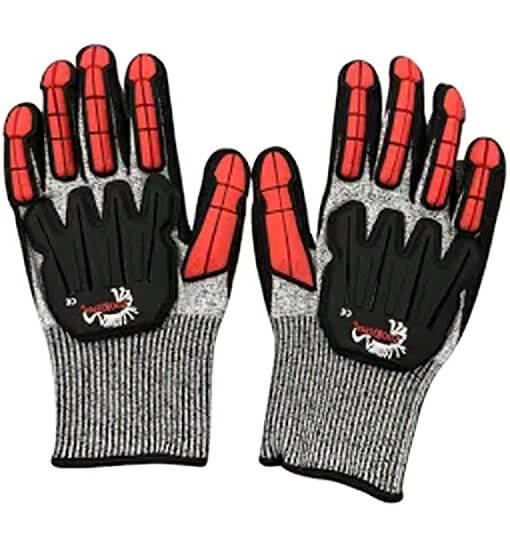
Important safety note: even clipped spine stumps can still cause puncture wounds if handled carelessly. Keep your fingers away from the cut ends. Some experienced fishers use a bucket or container to hold the fish in place while clipping, keeping their hands further from the spines. Thick kitchen gloves worn throughout this step reduce risk significantly.
After clipping, check with a gloved finger along the dorsal surface, the underside, and the ventral fins to confirm all spines have been addressed. A missed spine is an envenomation waiting to happen.
Step 2: Scaling and Rinsing
Lionfish have small, easily removed scales. A quick scrape with the back of a knife along the body from tail toward head, under running water, removes scales efficiently. Rinse the fish thoroughly after scaling. You won’t eat the scales, but they harbor bacteria that you don’t want on your cutting board or fillets.
Step 3: The Fillet Cut
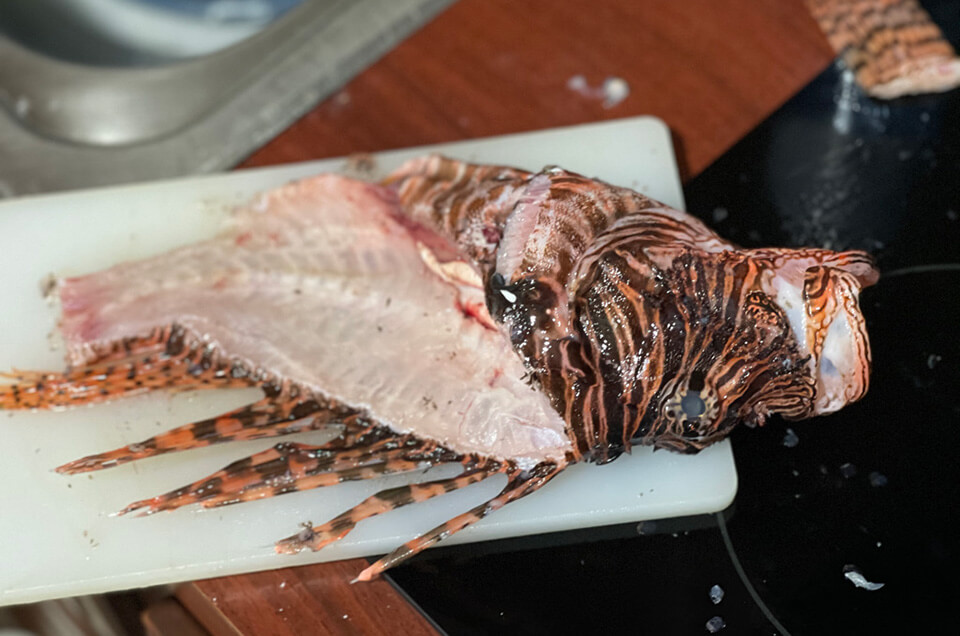
Place the prepared fish on a clean cutting board. With a sharp, flexible fillet knife, make your first cut just behind the pectoral fin, angling toward the head. Cut down to the backbone but not through it. From that entry point, run the blade along the backbone all the way to the tail, using the spine as a guide, keeping the blade flat and close to the bone to maximize yield. Lift the fillet free.
Flip the fish and repeat on the other side. A properly filleted lionfish yields two clean, boneless fillets. The rib cage is minimal and does not require a secondary cut in most specimens. The result, white, clean, pristinely fresh fish flesh, is deeply gratifying after the effort of the hunt.
Prefer to watch it done? See Roger’s lionfish cleaning videos.
Step 4: Skin Removal
Whether to remove the skin is a matter of preparation preference. For pan-searing or grilling, leaving the skin on produces a crispy exterior that protects the flesh during cooking. For ceviche, sashimi, or preparations where you want pure flesh, the skin should come off. To remove it, place the fillet skin-side down, hold the tail end firmly, and slide the blade between flesh and skin at a shallow angle, working toward the head with a gentle sawing motion. The skin separates cleanly from lionfish.
Yield, Storage, and Freshness Tips
A typical Caribbean lionfish at 12 inches length produces two fillets of roughly 2–3 ounces each. A large specimen at 16–18 inches may yield 4–5 ounces per fillet. Plan your recipes accordingly; for tacos or ceviche for four people, you’ll want 5–7 fish. Fillets keep in the refrigerator for up to 48 hours wrapped in damp paper towels and placed in a sealed container. For longer storage, vacuum-seal and freeze; lionfish freezes beautifully, maintaining its texture for up to three months.
For more about lionfish education, SSI certifications, hunting expeditions, and cooking, visit LionfishDivers.com and subscribe for updates on Roger’s upcoming SSI Lionfish Awareness Distinctive Specialty certification program.
For the full cleaning process, see how to clean a lionfish.