Lionfish Awareness in Aruba: Community, Conservation, and Lionfintastic
Aruba is one of those places that gets under your skin and stays there. The water is impossibly clear. The weather is almost always perfect. The people are warm, proud of their island, and deeply connected to the ocean that surrounds it. It’s also one of the Caribbean destinations where Roger J. Muller Jr. has spent the most time diving, hunting, teaching, and building relationships with a local conservation community that is absolutely serious about protecting its reefs.
Aruba’s Reef and the Lionfish Threat
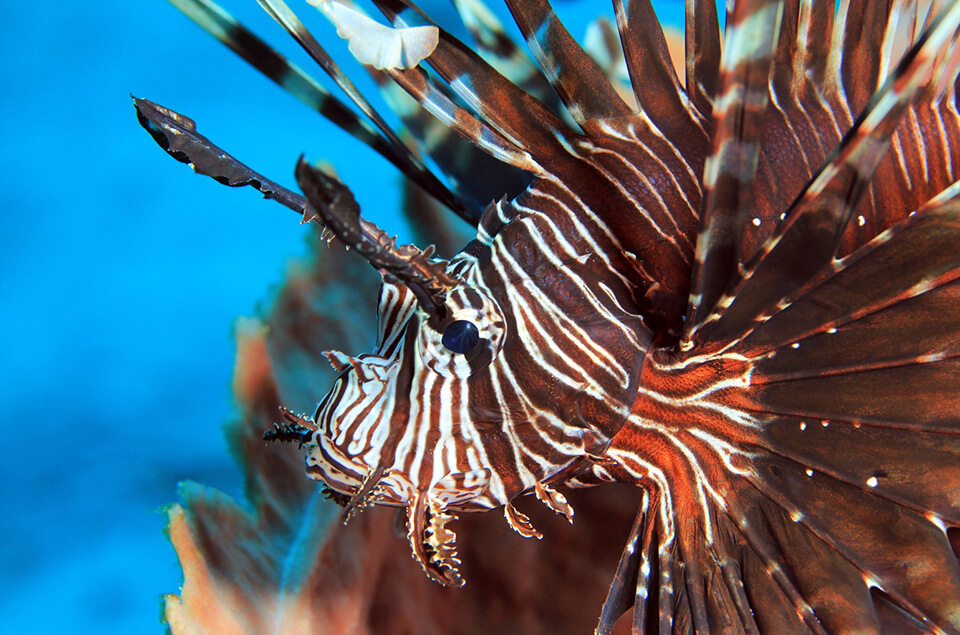
Aruba’s leeward (western and southern) coast is sheltered from the prevailing trade winds by the island’s geography, producing calm, clear water conditions that draw divers from around the world. The reefs here are genuinely spectacular, dense with hard corals, sea fans, sponges, and an extraordinary diversity of fish life. And like virtually every Caribbean reef system, they have a lionfish problem.
The lionfish arrived in Aruba’s waters in the mid-2000s and have steadily established themselves across the island’s reef structures. Local dive operators began responding to the invasion early, organizing removal dives and partnering with restaurants to create consumer demand for the fish. The result is one of the Caribbean’s more mature and organized local responses; not a solved problem, but a community genuinely fighting back.
Susan Hieter and Lionfintastic: Art as Conservation
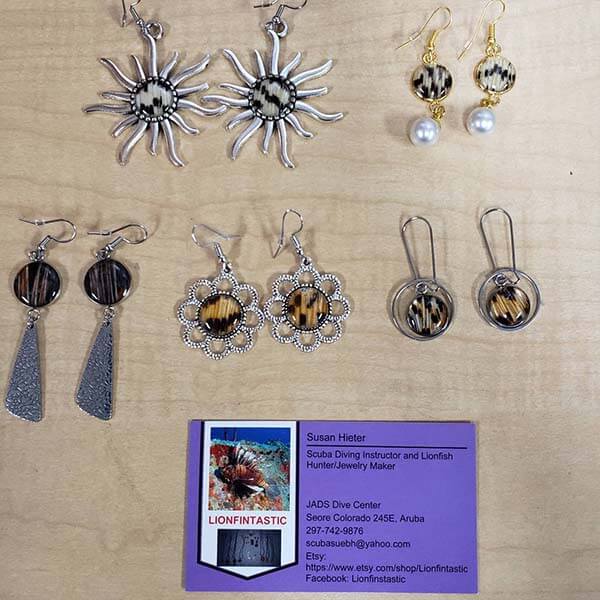
Among the most creative and inspiring responses to the lionfish invasion that Roger has encountered anywhere in his travels is the work of Susan Hieter, the artist and conservationist behind Lionfintastic, a remarkable jewelry enterprise based in Aruba that transforms lionfish spines and fins into wearable art.
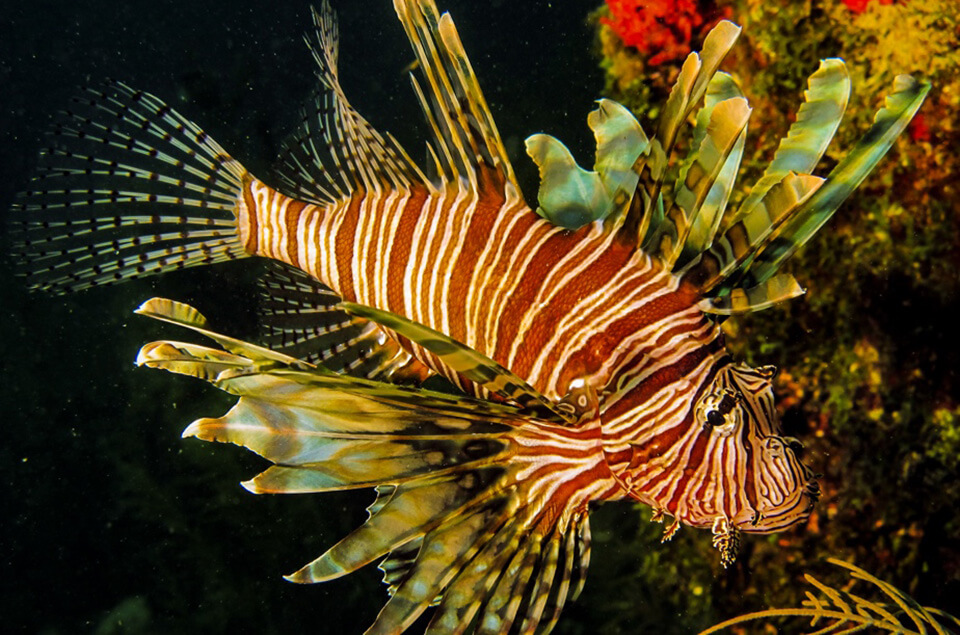
Susan’s pieces are genuinely beautiful: earrings, pendants, bracelets, and decorative items that use the natural sculptural quality of lionfish spines, the same spines that carry venom, as their central design element. Properly dried and treated, the spines lose their venom entirely and become striking, organic materials with a texture and translucency that no manufactured product can replicate. The fins, preserved with equal care, display the same dramatic fan-like structure that makes lionfish so visually arresting underwater.

How Jewelry Becomes a Conservation Message
What makes Lionfintastic genuinely powerful as a conservation tool is the conversation it starts. When someone wears a lionfish spine pendant and a curious friend asks about it, that opens a door to the entire story: the invasion, the reef damage, the removal programs, the culinary movement, the dive community’s response. The jewelry is a beautiful, wearable conversation starter that carries the conservation message into environments it would never otherwise reach: upscale restaurants, hotel lobbies, beach clubs, and dinner parties where scuba divers are the minority.
Susan’s commitment to the cause extends well beyond the jewelry itself. She’s an active participant in Aruba’s conservation community, connected to dive operators, restaurant owners, and visiting advocates like Roger. The collaboration between Lionfintastic and LionfishDivers.com represents exactly the kind of cross-sector partnership that makes conservation movements sustainable over time.
Roger in Aruba: Teaching and Hunting
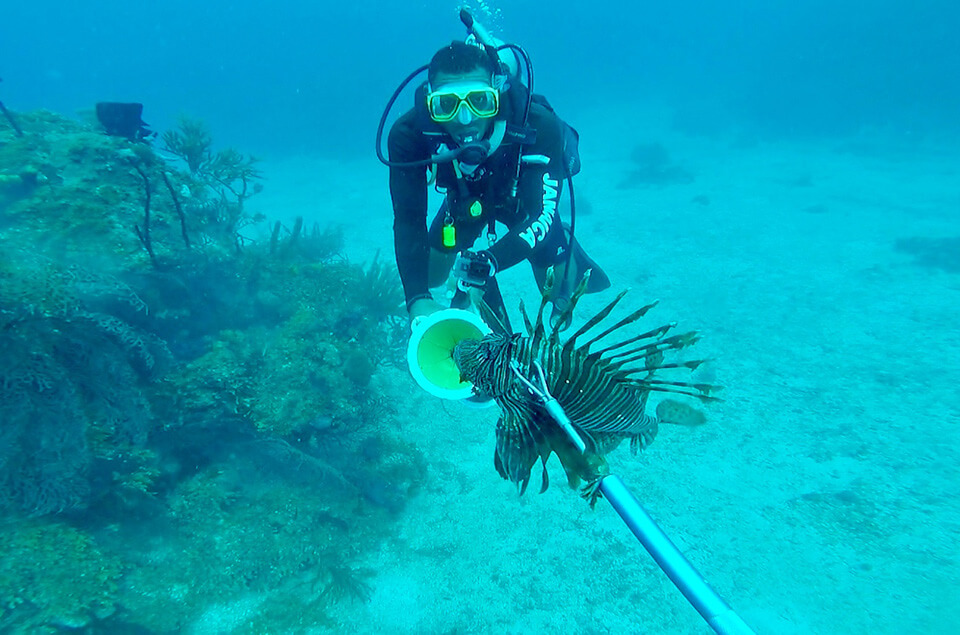
Roger’s visits to Aruba have included both hunting expeditions and formal teaching, most recently, the delivery of SSI’s Invasive Species Management course to local divers and dive professionals. Teaching this course in Aruba rather than in a New Jersey classroom adds a dimension that simply can’t be replicated: students go from classroom to reef in a single day, applying their new skills in real conditions against real lionfish on actual Aruban reef structure.
The response from the local dive community has been enthusiastic. Aruba’s dive professionals are motivated, well-trained, and hungry for more tools and credentials to fight the invasion on their home reef. Roger’s visits have consistently generated new certified hunters and new connections within the local conservation network.
Getting Involved in Aruba’s Lionfish Community
If you’re planning a dive trip to Aruba and want to participate in lionfish removal, start by connecting with local dive operators before you arrive. Let them know you’re a certified or interested hunter; the reaction is invariably welcoming. Bring your FoldSpear and Zookeeper. Ask about restaurants serving lionfish and make a point of ordering it. Visit Lionfintastic and buy something beautiful. And check LionfishDivers.com for upcoming organized hunting trips to Aruba; Roger returns regularly, and there’s always room for divers who share the mission.
For more about lionfish education, SSI certifications, hunting expeditions, and cooking, visit LionfishDivers.com and subscribe for updates on Roger’s upcoming SSI Lionfish Awareness Distinctive Specialty certification program.