What Is a Lionfish? The Beautiful Invader You Need to Know About
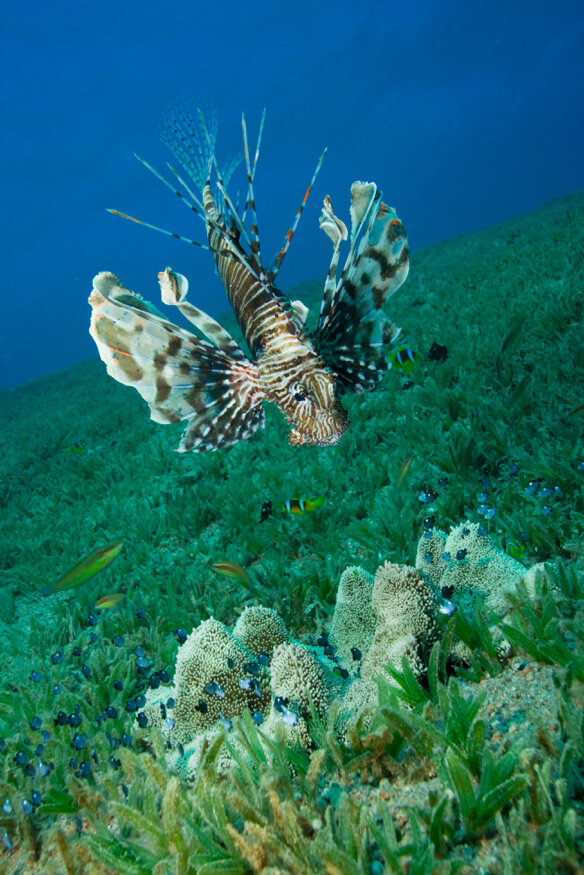
If you’ve ever slipped beneath the waves of the Caribbean and spotted a striped, fan-finned fish hovering motionless near a coral head, you may have come face-to-face with one of the most fascinating and dangerous invasive species in the Atlantic Ocean: the lionfish (Pterois volitans and Pterois miles).
At LionfishDivers.com, we’ve dedicated over a decade to educating divers, snorkelers, children, and ocean advocates about this remarkable fish — and why stopping it matters so much.
Origins: Where Did Lionfish Come From?
Lionfish are native to the Indo-Pacific — the warm ocean waters stretching from the Red Sea to the central Pacific. In their home waters, they are kept in check by natural predators, parasites, and thousands of years of ecological balance.
In the Atlantic, Gulf of Mexico, and Caribbean, however, they have none of those natural checks. The first confirmed sighting of lionfish in Atlantic waters was recorded off the Florida coast in 1985. Since then, their expansion has been nothing short of explosive, spreading throughout the entire Caribbean basin, the Gulf of Mexico, and even into the Mediterranean.
Why Are Lionfish So Dangerous to the Ecosystem?
Lionfish are voracious predators with a stomach that can expand up to 30 times its normal size. They consume over 50 different species of fish and crustaceans and have been documented reducing juvenile reef fish populations by as much as 79% in some areas within just five weeks of their arrival.
They reproduce year-round, with females releasing up to 30,000 eggs every 4 days. They have no natural predators in the Atlantic. They are incredibly adaptable, living in everything from coral reefs to seagrass beds to mangroves — even brackish estuaries.
Are Lionfish Venomous?
Yes — lionfish are venomous, not poisonous. Their 18 needle-like dorsal, pelvic, and anal spines deliver venom capable of causing intense pain, swelling, nausea, and in rare cases, more serious reactions. Crucially, the venom is protein-based, meaning it is destroyed by heat — making cooked lionfish completely safe to eat.
This is one of the most important messages we share at LionfishDivers.com: eating lionfish is not only safe, it’s encouraged. Consuming them is one of the most direct ways the public can help fight back.
What Is LionfishDivers.com Doing About It?
Roger J. Muller Jr., an SSI Divemaster and Instructor based in New Jersey, founded LionfishDivers.com over ten years ago with a singular mission: to educate, motivate, and equip the diving community to take action against the lionfish invasion. Through dive education, certified specialty courses, hunting expeditions, and public outreach to children and adults alike, Roger has helped hundreds of divers understand this threat and become part of the solution.
The Bottom Line
The lionfish is one of the greatest ecological threats our reefs have ever faced. But it’s a threat that divers can actually fight back against, one spear at a time. Learn more about how to get involved, get certified, and help protect the reefs at LionfishDivers.com.