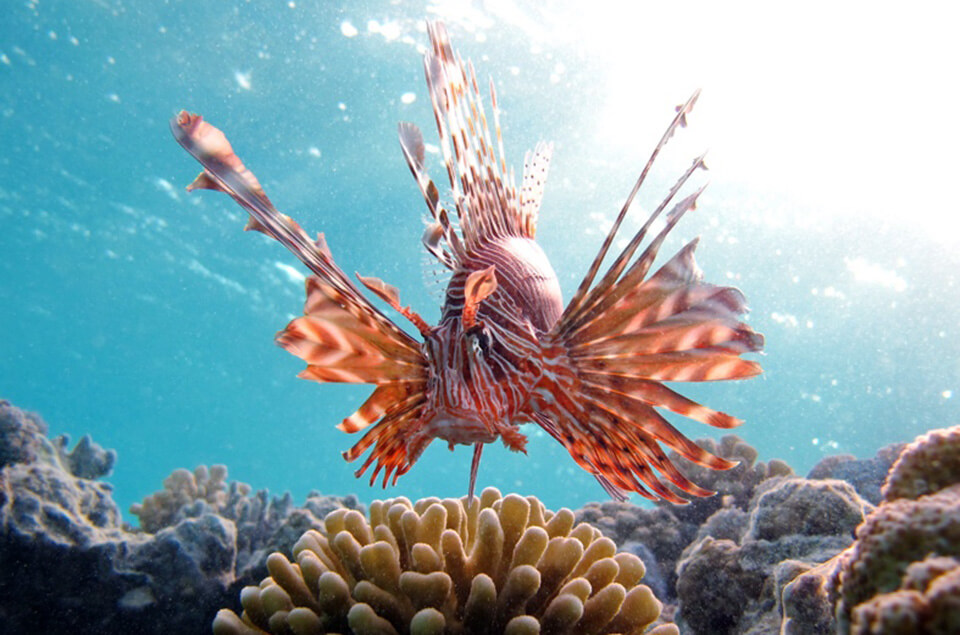
116 Lionfish, One Giant, and Two Spines
A First-Person Account of a Venomous Lionfish Sting in Dominica
The Day Everything Changed
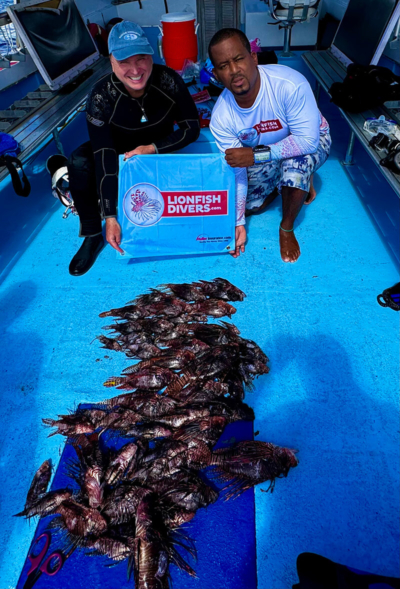 It was supposed to be the perfect day. Friday, December 1st, 2023 — the sun was blazing over the island of Dominica, the Caribbean’s “Nature Isle,” and I was on a mission. Three dives with the crew at Dive Dominica. My goal: hunt as many invasive Lionfish as humanly possible and pull them off the reef before they devoured another generation of native tropical fish.
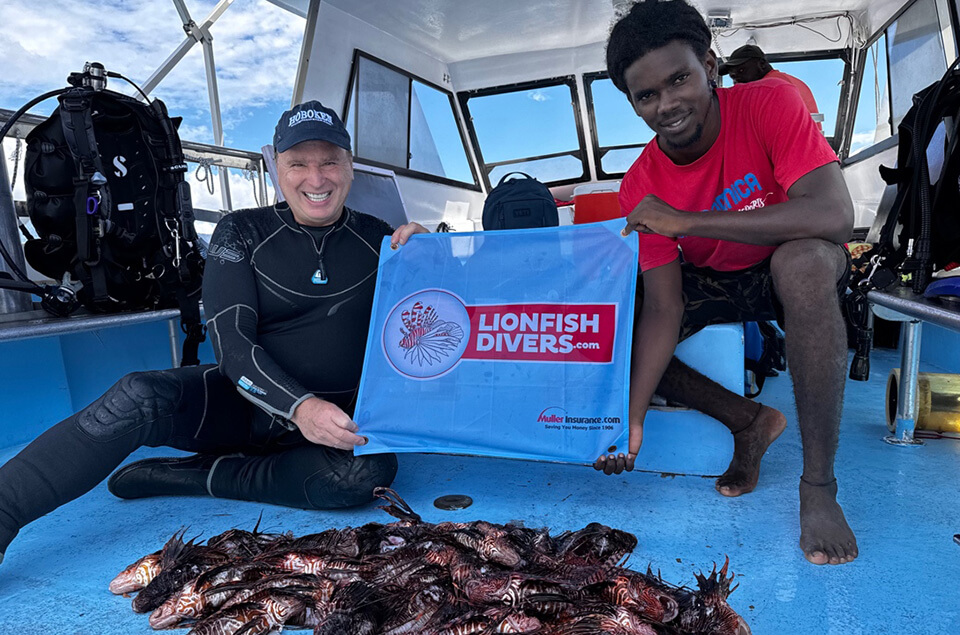
By the time the third dive began, I had already speared 75 Lionfish across the first two dives — a number that would make most divers call it a legendary day and head to the bar. Not me. I loaded up again and dropped back under.
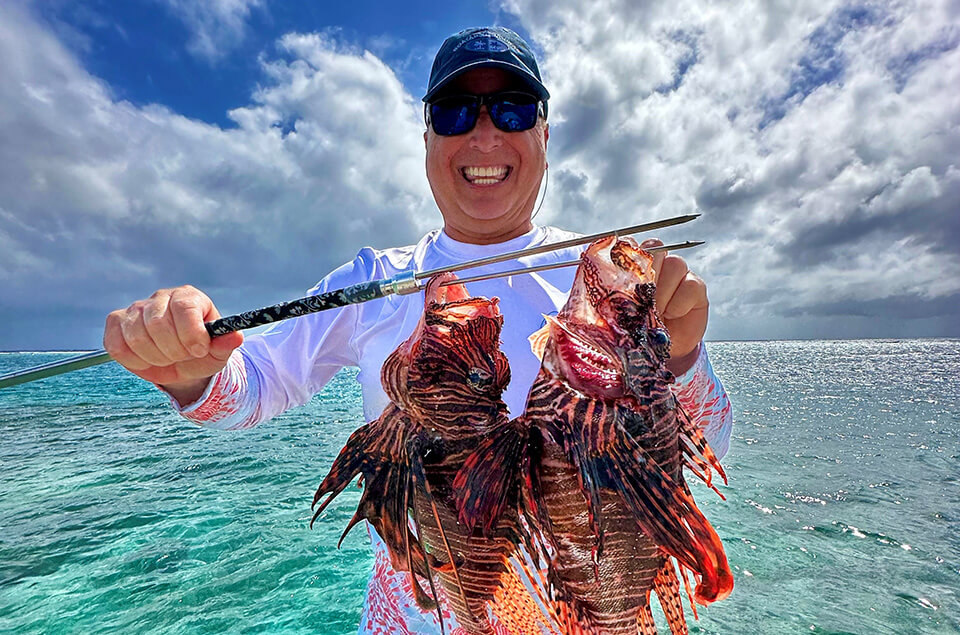
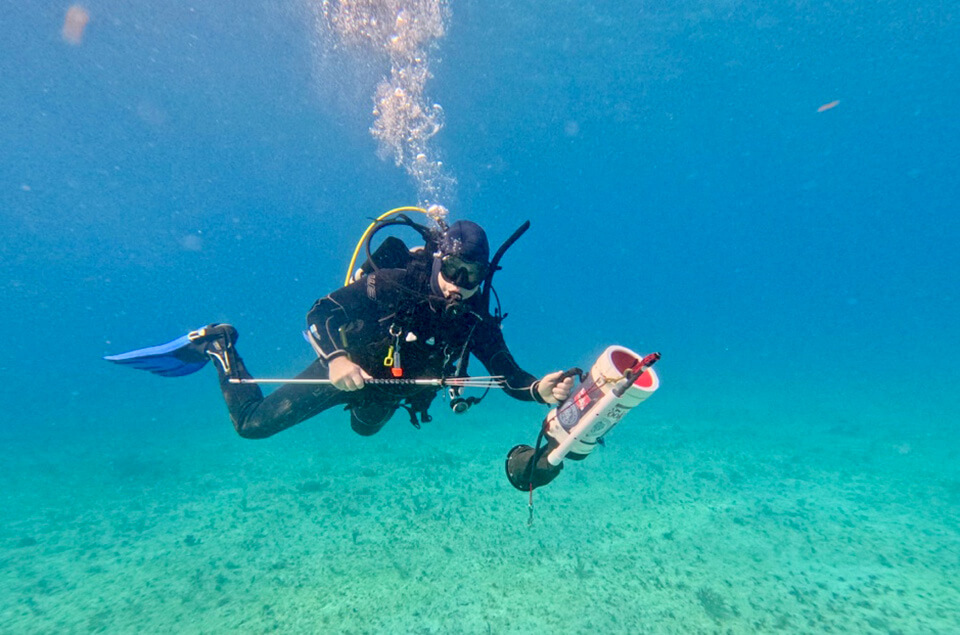
On that third dive, I found a cluster of six Lionfish hovering around a structure at 50 feet. I’d seen scenes like this hundreds of times. I targeted the biggest one first — always the biggest one first — and sent my spear straight into it. The fish was impaled but still very much alive, and the spear tip was moving around dangerously. I reached over with my left hand to tighten the connection so I could secure it safely into my Zookeeper containment tube.
That’s when the fish made its last move.
In one sudden twist, the giant Lionfish rotated its body and drove two venomous spines directly into the top of my left hand — one above the knuckle, one into the top of my second finger. It was a sharp, immediate, electric jolt of pain. Even at 50 feet underwater, with a regulator in my mouth, I felt it instantly. After hunting thousands of Lionfish, the fish had finally won a round.
“Even the best get got. Stay calm. Keep diving.”
I jammed the fish into my Zookeeper, signaled to my buddy — Divemaster Kevin Joseph — and kept going. I wasn’t about to leave five Lionfish on that structure. I borrowed Kevin’s Zookeeper and finished the job. By the time I started my ascent, the last dive alone accounted for 41 Lionfish, bringing my total for the day to 116.
But here’s where it got complicated: I was low on air. 300 PSI left in my tank. I was stung, bleeding slightly underwater from two puncture wounds, and I still had a 2-minute decompression stop at 40 feet and a 3-minute safety stop at 15 feet ahead of me. Kevin shared his air with me. I handed him my Zookeeper, tried squeezing the venom out of the sting sites (I got a little blood out before bruising started, so I stopped), and I stayed calm. Staying calm is everything. I’ve been stung before — I knew panic was the real enemy.
Treatment Begins: On the Boat and Ashore
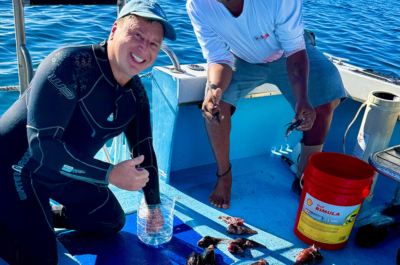 Back on the Dive Dominica boat, I immediately asked for hot water. They didn’t have any — which is a reminder to always bring your own hot water thermos when Lionfish hunting. What they did have was ice, and Captain Bill bagged some up for me right away. I pressed it against my finger and the top of my hand. The cold numbed the pain, and I was grateful for any relief I could get.
Then I remembered: I had Sting Master with me. I applied it directly to both sting sites.
When we docked, Dilma Bastian, the reservation manager at Dive Dominica, brought me coffee and water without being asked. The staff there is genuinely wonderful. Marcus, the boat assistant, improvised brilliantly — he cut a large plastic water bottle in half so I could submerge my entire hand in hot water, not just my finger. That improvised hot-water bath became my lifeline for the next several hours.
Here’s the hard truth about hot water treatment: when you first put a stung hand into hot water, the pain gets dramatically worse before it gets better. That’s not a sign to stop — that’s the heat working to denature the protein-based venom and break it down. You push through it. I kept adding hot water every time it cooled, because the moment the water temperature dropped, my hand throbbed like you would not believe.
Nature’s Cure: Screw Sulfur Hot Springs
My wife Andrea and I had already planned to visit Screw Sulfur Hot Springs that afternoon — a natural volcanic hot spring tucked into the jungle mountains of Dominica, about a thirty-minute drive from the dock. I brought my hot-water bottle along for the ride. Our driver Alick got us there around 5:00 pm, and the owner — known as Screw — greeted me at the gate. When I told him about the sting, he smiled and said the spring water would help. He wasn’t wrong.
The moment I submerged my hand in the hottest natural pool, the relief was almost immediate. It was far easier to keep my hand immersed in a natural spring than to keep pouring boiling coffee water into a cut bottle. I moved between the hottest pool and the second-hottest sulfur spring until about 6:30 pm.
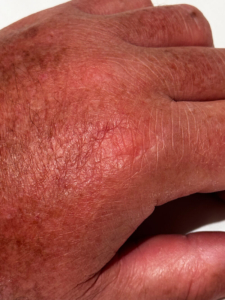
We left with our driver Alick for dinner at the Riverside Chinese Restaurant. The staff there graciously brought me more boiling water — I kept my hand soaking through the entire meal. By 7:30 pm, approximately four and a half hours after the sting, the acute pain was finally gone. My hand was still swollen — knuckles invisible under the puffed skin, veins completely buried — but the unbearable part was over. We were back at the hotel and in bed by 10 pm.
“Four and a half hours of hot water. That’s what it took. No painkillers. No hospital. Just heat, calm, and patience.”
Plot Twist: The Earthquake
At 4:30 am on Saturday, December 2nd, the room shook. Wooden closets rattled, the glass bathroom wall moved. My first groggy thought: was my brain affected by the venom? Was I hallucinating? No — it was an earthquake originating in Puerto Rico. I only confirmed this when I Googled it at 8 am. You can’t make this stuff up.
Sunday, December 3rd: Back on the Horse
 Most people would have spent the rest of their vacation on a beach chair. I booked three dives with Vergenie and Remi at Cabrits Dive Center. My hand was sore — genuinely sore — but I was there to hunt Lionfish and protect the reef. That mission doesn’t pause for a sting. I speared 111 more Lionfish that Sunday. The only real issue was some discomfort gripping my Zookeeper.
Every Lionfish I remove from the water means dozens, maybe hundreds, of native reef fish that survive another season.
Day-by-Day Recovery Log — Research Reference
The following is my personal diary of recovery symptoms, recorded daily. This is intended as a genuine first-person research reference for divers, Lionfish hunters, marine biologists, and medical professionals documenting the progression of a double Lionfish envenomation. I took no pain medication at any point during recovery.
Research Notes: What the Venom Does
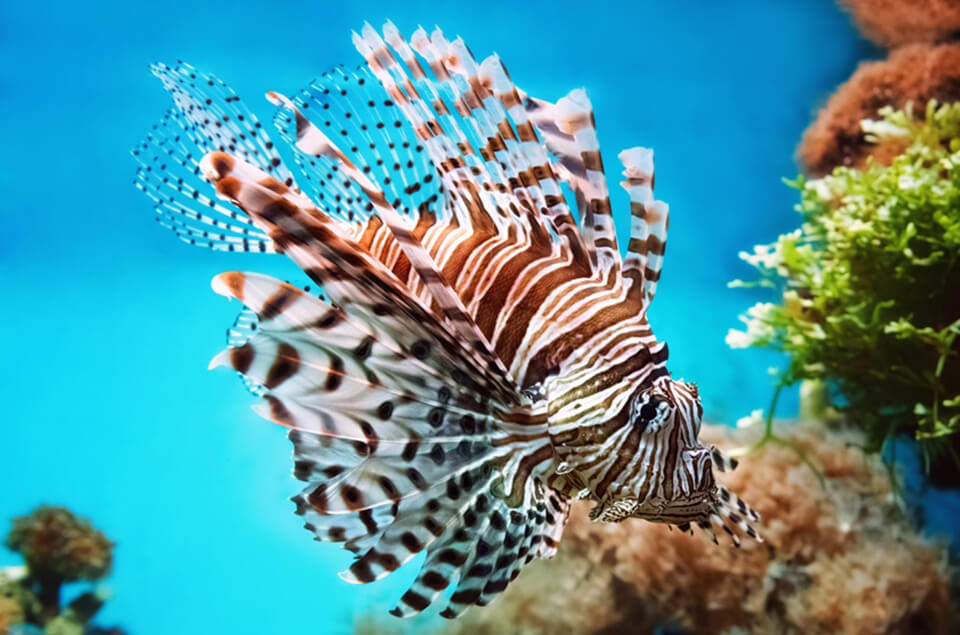
Lionfish (Pterois volitans and Pterois miles) possess 13 dorsal, 2 pelvic, and 3 anal venomous spines. The venom is a protein-based toxin — specifically a heat-labile acetylcholine-like substance — which means it can be denatured (broken down) by heat. This is why immersing the sting site in the hottest water you can safely tolerate (110–115°F / 43–46°C) is the gold-standard first-line treatment.
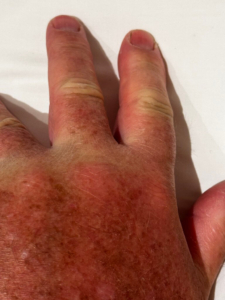 Key observations from this double-sting event that may be of research value:
- Delayed joint pain: Pain in the joints surrounding the sting sites intensified days 7–18 post-sting, consistent with the venom’s protein components triggering a localized inflammatory response in joint tissue. Muscles resolved first; ligaments and joint capsules showed the longest recovery.
- Re-swelling cycles: The hand went through multiple swell-and-reduce cycles over the 28-day period, suggesting the venom was not fully neutralized and continued to affect tissue intermittently.
- No necrosis, no systemic symptoms: Despite two simultaneous punctures from a large specimen and a delay of approximately 30 minutes before hot water treatment, no tissue necrosis occurred and there were no systemic symptoms (nausea, chest pain, respiratory distress).
- Ice vs. hot water: Ice provided temporary pain relief only. Hot water was the only treatment that addressed the venom itself. The pain initially worsened with hot water — this is expected and should not stop treatment.
- Altitude effect: Air travel approximately 4 days post-sting caused temporary increased swelling, consistent with pressure changes affecting already-inflamed tissue.
- Natural hot springs: Continuous immersion in volcanic sulfur hot springs provided superior treatment compared to intermittent hot water pours, due to consistent temperature and mineral content.
- Full recovery timeline: Approximately 27–28 days for full resolution of all symptoms from a double envenomation with two punctures from a large Lionfish specimen. Single stings may resolve faster.
- No medication taken: Zero pain medication or antihistamines used throughout the entire recovery, making this a useful baseline observation for the natural progression of Lionfish envenomation symptoms.
- Prior stings: Subject had been stung 3 previous times (including Panama 2014 and a frozen fish foot puncture). Prior experience and calm management are consistent with faster recovery compared to the first ever sting, which involved necrosis risk due to delayed treatment.
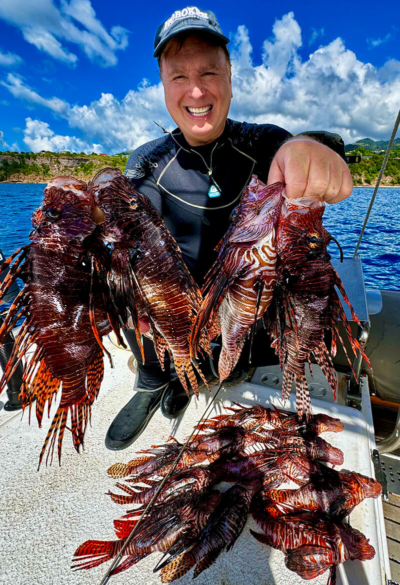 Safety Tips for Lionfish Hunters
- Never put your hands near a speared Lionfish. Even a dead or impaled Lionfish can sting. The fish can rotate its spines independently. Use your Zookeeper, a containment tube, or a partner’s equipment.
- Bring a hot water thermos on every dive. Dive boats often don’t carry hot water. A thermos of near-boiling water could save you enormous pain. This is the most critical piece of gear you’re probably not carrying.
- Do not wear gloves to handle Lionfish. Thick gloves can give divers a false sense of security that leads to reckless handling — and gloves also encourage touching coral and other protected marine life. Respect the reef. Keep your hands away from all fish, period.
- Stay calm if stung. Panic wastes air, increases heart rate, and can turn a manageable situation into a dangerous one. Signal your buddy, begin a controlled ascent with proper stops, and get to hot water as soon as you surface.
- Do not squeeze the wound. It may feel instinctive to try to push venom out, but you risk bruising, spreading the venom, and causing additional tissue trauma. Apply heat instead.
- Carry Sting Master or a similar topical treatment. Apply as soon as possible while waiting for hot water.
- Consider DAN insurance and training. Divers Alert Network offers courses on marine envenomation and provides 24/7 emergency consultation. If symptoms persist beyond two weeks or worsen unexpectedly, call DAN.
- If you’re far from hot water, do not delay treatment. The first Lionfish sting (Panama, 2014) showed clearly that delayed treatment leads to worse outcomes, including blistering from attempting heat via other methods (boat motors, etc.). The sooner heat is applied, the faster the venom denatures.
Final Thought
I’ve speared thousands of Lionfish. I’ve been stung four times. And I will keep hunting them as long as I can dive, because the damage these invasive fish do to Caribbean and Atlantic reef ecosystems is real, serious, and ongoing. Every Lionfish I remove protects native fish that can’t protect themselves.
But please hear this: even with years of experience and thousands of fish under my belt, a single moment of inattention was all it took. These fish are fast, their spines are independent, and the venom is no joke. Respect the fish. Keep your hands back. Hunt smart.
116 Lionfish in one day. Two spines. Twenty-eight days. Worth every second.
— Roger Muller | Professional Scuba Diver & Lionfish Hunter | LionfishDivers.com